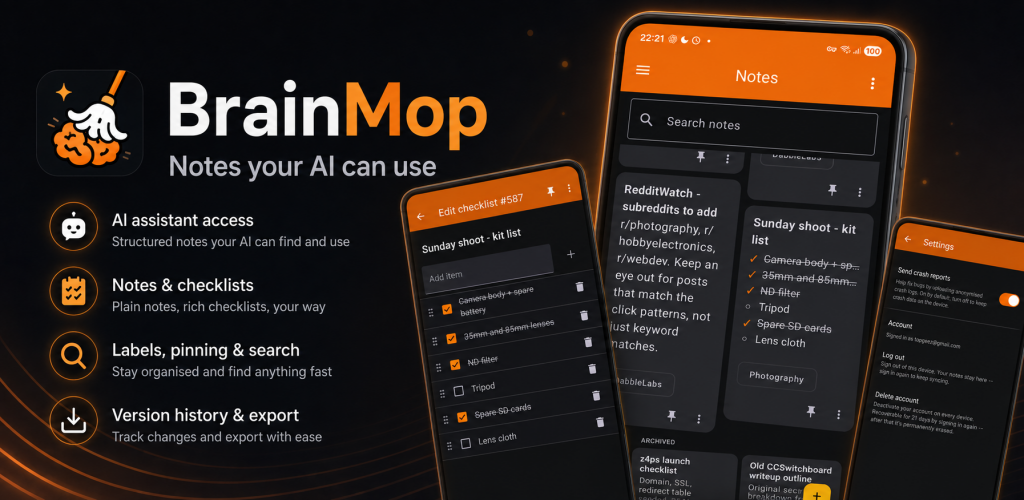
A notes app your AI assistant can read and write.
AI assistants forget everything between sessions. BrainMop gives one a place to keep its memory: notes it can search, read and write over MCP - and because MCP is an open protocol, it works with the assistant you choose, not just one vendor's.
The web app is live and usable today, and the memory server already works over MCP. The Android app is built and running, but it is not on Google Play yet, which is why this page says coming soon rather than download.
Two problems that look unrelated turn out to be the same problem: the things worth keeping end up somewhere they cannot be got back.
You explain the project, the constraints, and the decisions you already made. Next session you explain them again, in much the same words, from scratch.
A transcript you have to scroll is not something an assistant can search. What you said three weeks ago is technically saved and practically gone.
The useful stuff sits in a service that owns the export button, changes the terms when it likes, and starts charging when it feels like it.
The notes you keep and the memory your assistant needs are the same information, kept twice, in two places that cannot see each other.
BrainMop is an ordinary notes app that also speaks MCP, so you and an assistant are writing into the same place instead of two separate ones - and because MCP is an open protocol, that assistant is whichever one you choose.
Full-text search across titles, bodies and checklist items, so an assistant can go and find the relevant note rather than waiting to be handed it.
Create notes, append to one, replace a line, tick off a checklist item, file things under a label. Memory that can only read is just a document.
Every batch of assistant edits is grouped, so a session that went wrong is reverted in a single step rather than note by note by hand.
It is not an opaque memory blob. It is notes, in a normal notes app, that you can open, correct, re-file or delete yourself.
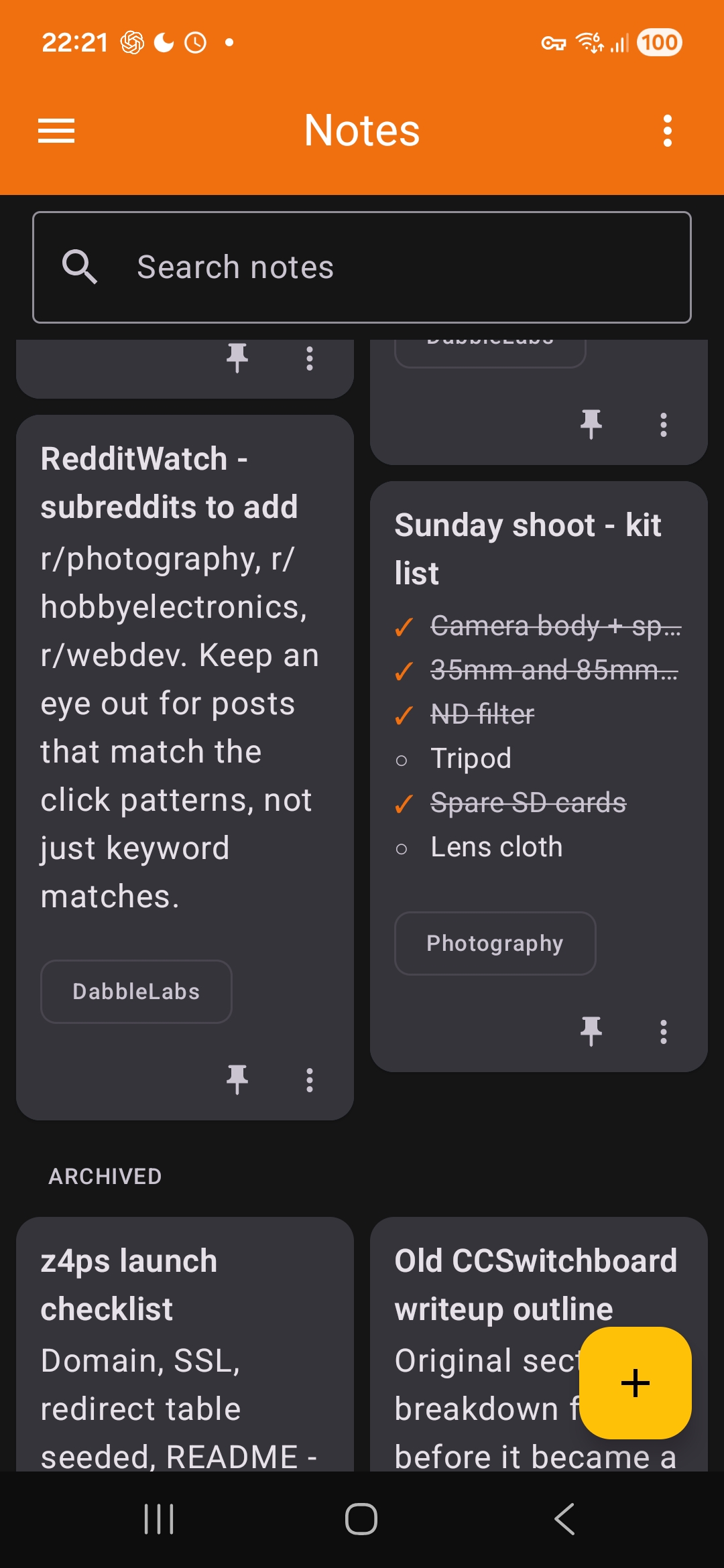
The web app and the Android app share one data model, so a note written by an assistant is just a note like any other.
The easiest way in is Claude: add BrainMop as a custom connector, sign in, approve, and you are connected - no token to copy. Under the hood that is MCP, an open protocol, so BrainMop is not locked to one vendor - other MCP assistants, or your own scripts, connect with a personal token instead, either through a local MCP server or a plain REST API. Your notes are not locked to whichever assistant you started with.
The tools cover the real surface of a notes app rather than a scratch pad: search and list, read, create text notes and checklists, append and replace text, tick items off, reorder them, add and rename labels, archive, trash and restore. A demoted-label convention keeps the notes an assistant writes for itself out of your way in the app. Access for other assistants and scripts is by an API token you create in the web app and can revoke at any time, scoped to read only or read and write.
The memory server is the unusual part, but it would be no use bolted onto a notes app you did not want to use.
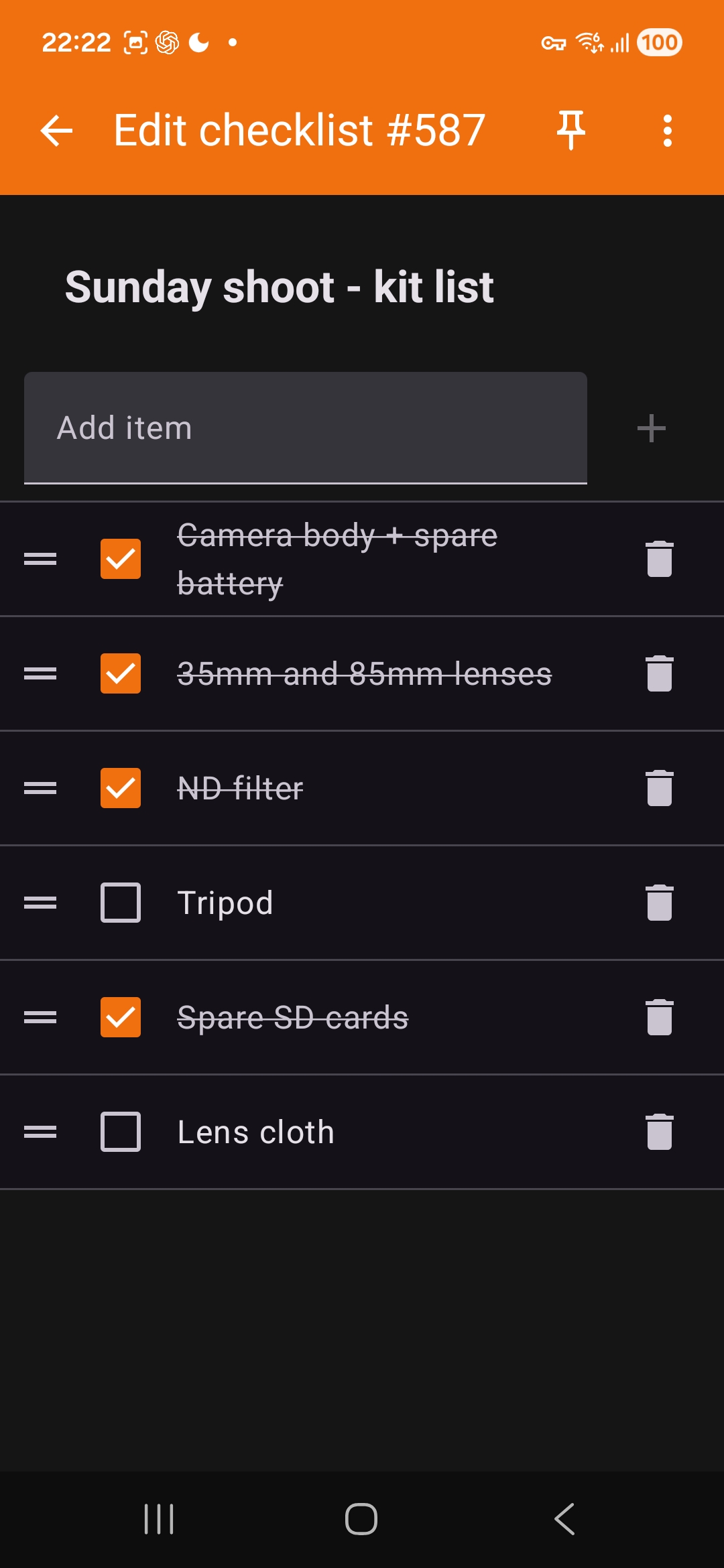
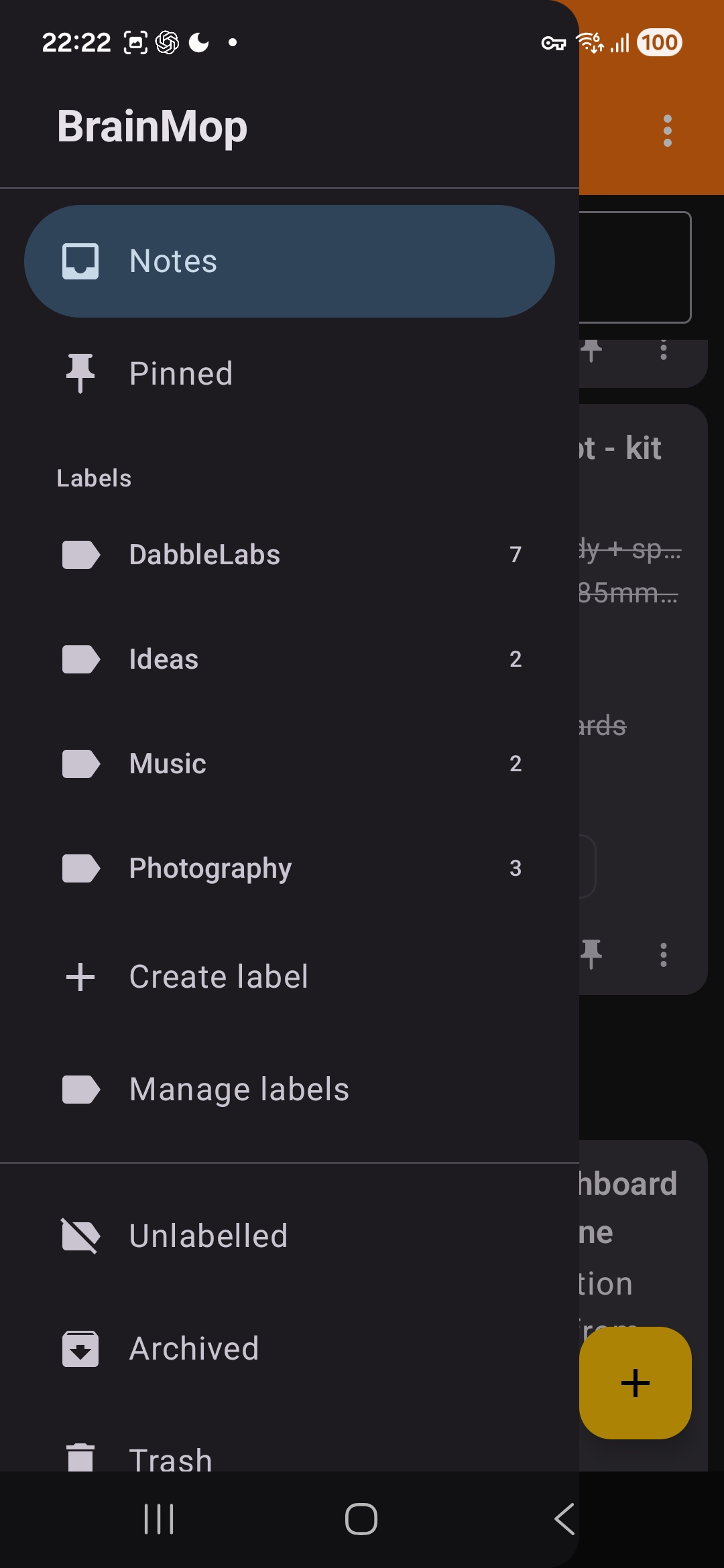
Rich text with bold, italic, underline, sizes and links, or a checklist you can reorder and tick off. Labels, pinning and archive keep the rest in order.
Every save keeps the version before it. Open a note's history, see what changed and who changed it, and put an older version back.
Deleting is a soft delete. Notes sit in the trash until you actually clear it, and restoring one puts it back where it came from.
BrainMop is not open for new accounts or subscriptions at the moment. The free notes app works exactly as it always has — nothing you already use is changing.
The web app, the API and the MCP server are live and in daily use. The Android app is built, works offline against a local database, and talks to the same account. Version history, grouped undo and restore are all shipped.
The honest gap is multi-device. Syncing one device to the server is solid, but merging conflicting edits made on two devices at the same time is still being finished, so treat it as one device at a time for now. Reminders and attachments are not built yet, and the Android app is not on Google Play.
BrainMop is a plain PHP and MySQL backend with no third-party notes service in the middle. There are no adverts, no analytics and no tracking, and nothing is sold or shared. Your notes stay reachable over a documented API, so they are never locked inside an app you cannot get them out of.
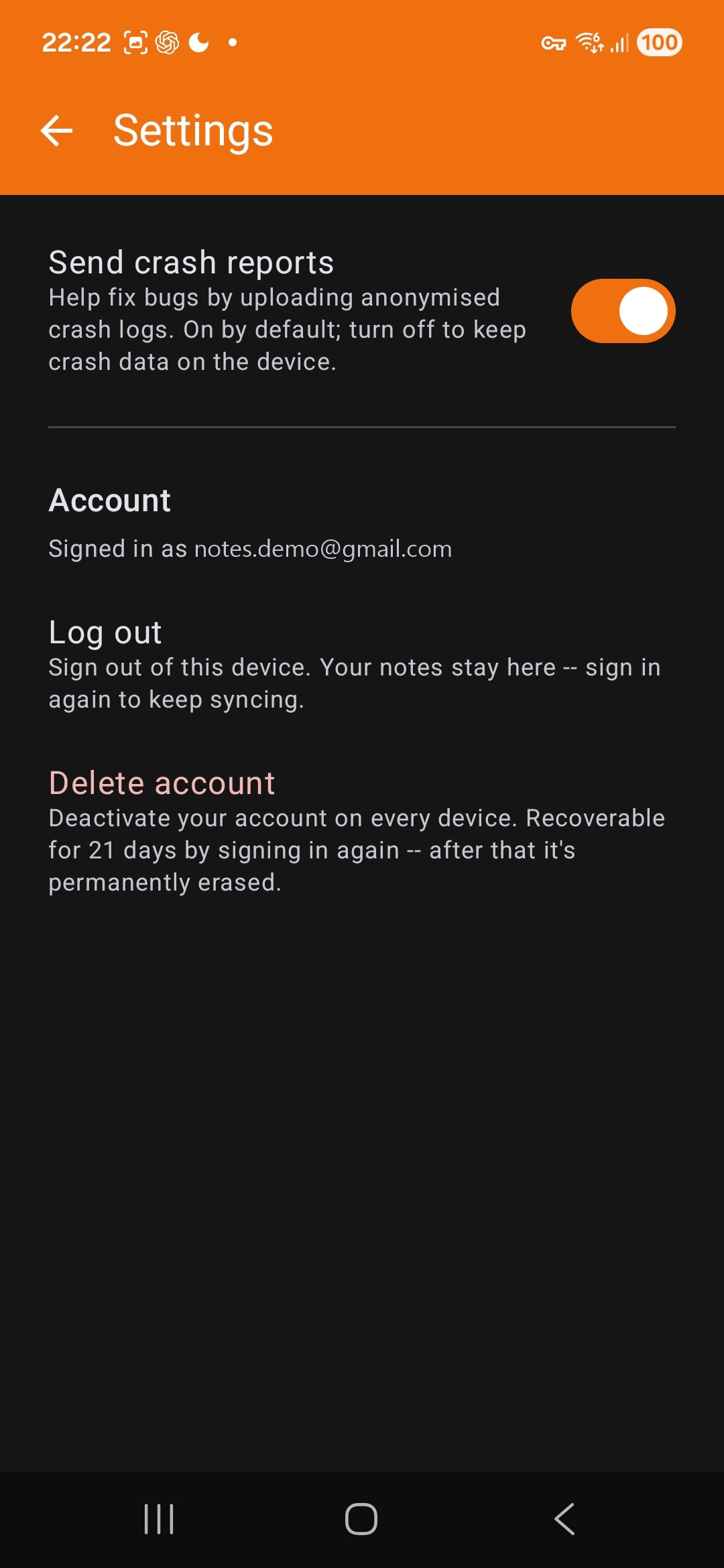
An account exists so your notes can reach your other screens. API tokens are hashed, scoped and revocable, and the only thing that leaves an Android device besides your own notes is an anonymous crash report you can switch off in Settings.
Anywhere the cost is re-explaining something you already explained, or hunting for a note you are sure you wrote down somewhere.
The web app is open now. Try it, connect an assistant to it, and tell me where the memory earns its place and where it gets in the way.
BrainMop is built by one person, and the core notes app is free. Donations help cover hosting, the server the notes actually live on, and the unglamorous work of keeping a small app moving.